
ASCENDING ELEVATIONPOOKODE, WAYANAD 2026
“The Himalayan region in Himachal Pradesh and Uttarakhand has been marketed as a space for tourism and hydropower expansion under the guise of development, triggering severe ecological distress.”
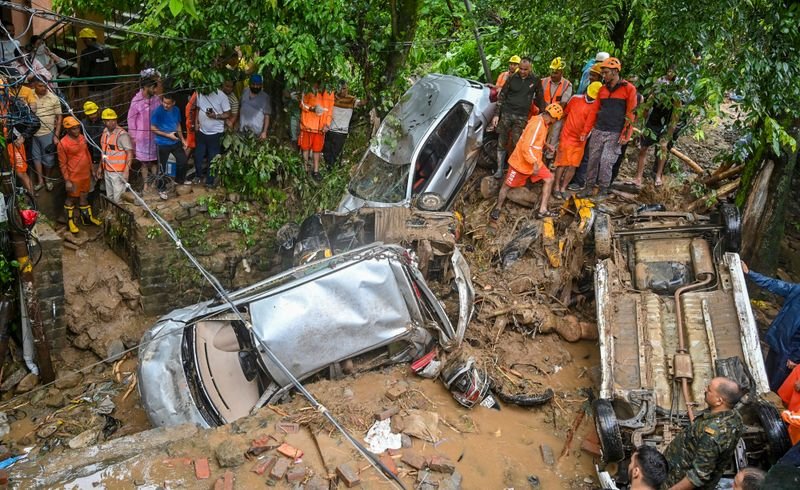
On the night of August 11, 1997, a catastrophic cloudburst in the upper catchment of the Andhra Khad, near Chirgaon village at Rohru in Shimla district, Himachal Pradesh, unleashed a deadly torrent of debris-laden floodwaters that swept through the narrow Himalayan valleys. Over 200 lives were lost, countless homes destroyed and public infrastructure decimated. The disaster wasn't just the result of extreme weather or an "act of God", it was the culmination of human negligence, ecological mismanagement, unsustainable human activity, a lack of preventive planning and policy failure.
Today, 28 years later, the same grim pattern has resurfaced across the Himalayas. Cloudbursts and flashfloods recently struck Thunag and Seraj in Mandi district, and Uttarkashi in Uttarakhand, bringing back the chilling memories of 1997. These disasters reinforce the same uncomfortable truth: we have not learned from the past. What is more alarming is that this has now become a recurring pattern in the region's ecological behaviour — with increasing frequency and intensity.
The fragile Himalayan ecosystem, repeatedly stressed by deforestation, unregulated construction and climate variability, is responding with more frequent flashfloods, landslides and cloudbursts. Each disaster is part of a larger, predictable trend, rooted in both environmental mismanagement and systemic governance failure.
The fundamental question now arises: Why, despite nearly three decades of warnings, expert reports and recurring disasters, do our policies and practices remain unchanged? The answer lies in a toxic blend of short-sighted development paradigms, corporate commodification of delicate catchments, and a systemic failure to center geomorphological constraints and local ecological wisdom in mountain governance.